Comparing Guntersville Waterfront Home Types: Channel vs Coves
March 5, 2026
March 5, 2026
Is your perfect Lake Guntersville day all about fast runs to open water or quiet mornings in a glassy cove with a coffee and a kayak? When you shop lakefront homes in Guntersville and across Marshall County, that choice often comes down to main channel versus quiet coves. It is a real lifestyle decision, and it also changes what you should look for in docks, depth, wakes, and permits. In this guide, you will learn the practical differences, the tradeoffs to expect, and a clear checklist to use during showings. Let’s dive in.
Lake Guntersville is Alabama’s largest lake, spanning roughly 67,900 to 69,100 acres and running about 75 miles as part of the Tennessee River system. You see that scale in the long sightlines and broad “big water” views from many shorelines. The reservoir and Guntersville Dam are managed within the TVA system, which supports navigation, flood control, and recreation. That system shapes how the main channel functions and how coves develop around it. For a quick overview of the lake’s size and regional role, see this summary from Outdoor Alabama on Guntersville’s fishing and stature.
The main channel is the navigable corridor of the Tennessee River where through-boat traffic and commerce move. It is supported by locks and dams across the system and receives ongoing navigation attention. Coves and backwaters are sheltered embayments or side arms off the main stem. They are usually shallower and more protected from passing wakes. Shoreline rules and how “channel” is defined for permits are regulatory matters within the TVA and USACE system. You can learn more about navigation corridors in the region from the U.S. Army Corps of Engineers’ navigation resources.
The main channel handles the highest overall boat counts because it is the path for larger recreational vessels and commercial traffic. Marinas, public ramps, and tournament staging zones tend to cluster near this corridor, which increases activity. On tournament days and holiday weekends, you can expect more fast-moving boats and busier through traffic. For a sense of event-driven spikes, see Bassmaster’s coverage of tournaments on Lake Guntersville. If you plan to trailer in family or friends often, it helps that many public ramps ring the lake, with several near the main corridor.
If you want quick access to open water, performance boating, or frequent marina visits, main-channel proximity is a plus. If you want low boat noise and a calmer shoreline, a protected cove will usually feel better day to day. Both options can be great for fishing, but the feel from your porch and dock will be very different.
Depth varies around the lake, and it matters for dock type and boat size. The main channel and municipal harbors tend to have deeper approaches and slips, often in the double digits in outer slips, which suits larger boats and covered slips. A practical example of deeper harbor conditions appears in this review of a Guntersville harbor with deep outer slips. In smaller coves and tributary arms, approach depths are often shallower. Floating docks and single slips are common there.
Dock design and allowable size or location depend on shoreline classification and approvals. Where depths fluctuate or are modest, floating docks are frequently preferred. Fixed pilings and boathouses appear where depth and permitting allow. For practical permitting and design realities that owners navigate across the TVA system, see insights from a specialist on dock permitting and timelines. Always verify approach depth at mean operating pool and confirm details with the current owner or builder.
Wake exposure changes the way your dock and shoreline feel. Main-channel lots typically experience more frequent and higher-energy wakes because they sit beside the through-traffic corridor and near launch points. Protected coves tend to attenuate wake energy, so water feels calmer on average. Research on wake-driven waves shows that channel shape, vessel type and speed, and distance to shore drive how much energy actually reaches the bank, and repeated exposure can speed shoreline wear. If low motion at the dock is a top priority, location is key. For background on wake effects, review this study on wake-driven shoreline impacts.
Guntersville is known for rich aquatic vegetation that supports bass and panfish. Native and invasive plants, including hydrilla and eelgrass in certain seasons and places, tend to concentrate in coves and sheltered flats. That is great for fishing, but heavy plant growth can complicate slow-speed navigation and slip approaches in very shallow coves at times. TVA runs an aquatic plant management program at Guntersville to address invasive growth and balance recreation. You can learn more about that effort in TVA’s overview of its aquatic plant management program and invasive species.
Main-channel homes often deliver long, open-water views and a wider sense of horizon. Access to deep water can make moorage for larger boats easier, and marinas or ramps are often close by for fuel and services. Owners who value fast runs to open water, performance boating, and quick tournament access tend to favor these properties. The tradeoff is less privacy at peak times and more motion at the dock when traffic picks up.
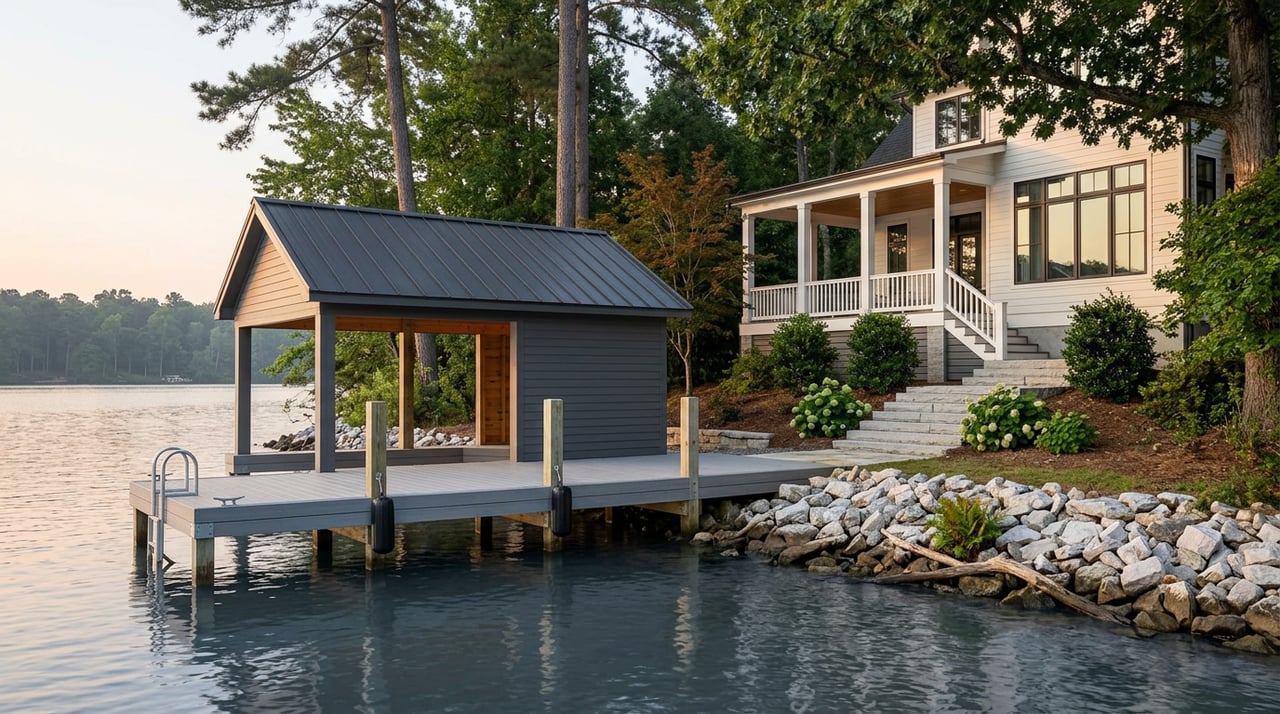
Cove homes tend to feel more tucked-in, with tree-lined shores and sheltered water. You often see floating docks and single slips that fit pontoons and runabouts well. Many buyers choose coves for quieter water, paddlecraft, family swimming, and shade. The tradeoff is shallower approaches, the chance of seasonal vegetation near the shoreline, and the need to confirm approach depths before you buy.
Coves with long-standing littoral vegetation can hide submerged stumps or snags, which raise the risk of a prop strike at low speeds or in very shallow approaches. Main-channel areas have fewer snags but more navigational exposure to passing traffic and wakes. Each property is different, so local hazard markers, seller disclosures, and a slow test run from your dock to open water are smart steps. TVA’s aquatic plant resources also help explain where and why vegetation concentrates in backwaters.
On TVA-managed shoreland, approvals are required for private water-use facilities. This process is known as Section 26a, and it appears in the Code of Federal Regulations for residential access shoreland. As a buyer, confirm that any existing dock has an active, documented approval and whether that authorization is transferable with the lot. Unpermitted structures can be subject to removal. You can read the underlying framework in 18 CFR Part 1304 for TVA residential access shoreland.
Approvals that involve new structures, dredging, or fill can take months to process. Many owners use local permitting agents or dock builders to assemble and submit applications. Timelines and fees vary, and documented authorizations should be part of your offer and due diligence. For a practical view of steps and timing, see this overview from a dock-permitting specialist.
You should review FEMA flood maps and check with the community’s floodplain administrator to understand flood zones and insurance needs for a given property. Separately, TVA manages reservoir pools for navigation, flood control, and recreation. Guntersville’s pool is typically managed within relatively narrow seasonal ranges compared with some other reservoirs, but you should still verify dock clearance and approach depths against the home’s elevation and TVA operating data. For a concise reference on how reservoir operations interact with appraisal and flood considerations, see this summary on reservoir operations and appraisal context.
Use this short list to focus your questions and notes:
Use these quick guides to narrow your search:
There is no single “best” spot on Lake Guntersville. Main-channel homes tend to deliver big-water views, deeper approaches, and quick access to the action. Cove homes offer calmer water, privacy, and a family-friendly feel. Your fit comes down to how you boat, relax, and host the people you love.
If you want seasoned guidance on depth, permits, shoreline rules, and value, you will feel at home with The Ken Williams Sales Team. Our team specializes in Lake Guntersville waterfront, with 40-plus years of local experience and full-service buyer and seller support. Let’s align your lifestyle, your boat, and your budget with the right shoreline.
Stay up to date on the latest real estate trends.
Embrace the beauty of Lake Guntersville. Whether you’re searching for a weekend retreat, a full-time residence, or the perfect place to retire, our team is here to help you find a home that fits your lake life.